
The Complete Step-by-Step Guide to Conducting a Fire Hydrant Flow Test (NFPA 291)
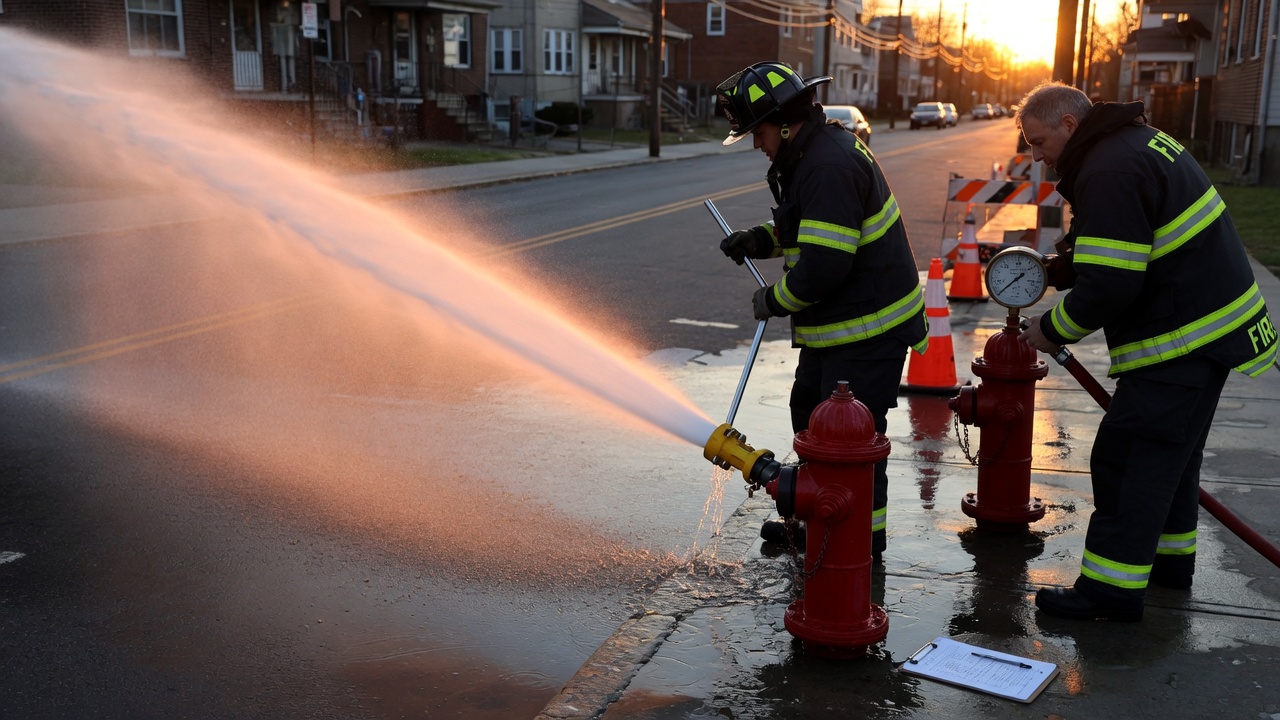
When an authority having jurisdiction, insurer, or design engineer asks for available fire flow, they are not asking for a spreadsheet exercise. They are asking whether your crew can produce a clean, repeatable NFPA 291 hydrant flow test: the right residual hydrant paired with the right flow hydrant(s), static and residual pressures read at the right moments, pitot readings taken on fully opened outlets, and results marked and documented so anyone downstream can trust them.
This guide is written for the people who actually run the test—utility operators, fire prevention staff, and contractors who need a field playbook, not a fluid-dynamics lecture. You will walk through crew roles, how to choose and pair hydrants, the live test sequence from static through residual to shutdown, how to convert pitot readings into flow, how to mark the hydrant to NFPA 291 color classes, and what to put on the report so AHJs accept it. Calculator theory stays in the background; the sequence you run on the street stays in front.
If you follow the pairing rules and the live order of operations, the numbers fall out cleanly. If you skip pairing or rush residual readings, no formula will save the result. The rest of this article is the step-by-step path from setup to accepted documentation.
What NFPA 291 Expects From the Crew on the Street
That path starts with treating NFPA 291 as what it is: a recommended practice that authorities having jurisdiction and water utilities routinely adopt or reference when they need defensible hydrant data. It is not a loose field habit or a set of optional tips. When a crew works to NFPA 291, every pressure reading, outlet choice, and note on the sheet has a job—feeding later available-fire-flow calculations that designers, fire protection engineers, and plan reviewers will actually use.
The operational goal is straightforward. You measure how the water system behaves under a real discharge so that residual pressure and flow volume can be paired and carried forward. Static pressure alone tells you almost nothing about capability under demand. What matters is the drop from static to residual while a known quantity of water is leaving the system, plus enough detail on the discharge itself that someone else can reconstruct the test without guessing.
Residual hydrants and flow hydrants are different jobs
On the street, that means assigning two distinct roles. The residual hydrant is the pressure point: it stays closed as a discharge path while you watch the gauge for static and then residual pressure as flow is taken elsewhere. The flow hydrant is the discharge point: you open it, measure outlet size and coefficient, and take a pitot (or meter) reading so discharge can be calculated. Both roles matter. Residual without a known flow is only a pressure drop; flow without a true residual at a separate hydrant is only a dump of water. Skip the pairing and the numbers stop supporting available-fire-flow work.
Minimum observations the crew must capture
Before anyone packs up, the field record has to hold the observations that make the test usable later:
- Static pressure at the residual hydrant before any test flow
- Residual pressure at that same hydrant while flow is established
- Outlet size and coefficient on every flowing outlet
- Pitot (or meter) reading used to determine discharge
- Time of the test and precise location of residual and flow hydrants
- Who authorized the test
Crews that skip a true residual reading, or that flow the same hydrant they are using only for pressure, routinely hand designers figures that cannot be defended. The recommended practice assumes separate residual and flow roles, a live sequence that holds residual steady long enough to read it honestly, and a complete set of field notes. Get those right on the street and the rest of the process—planning the pair, running the sequence, and documenting the result—has a foundation that holds up.
Pairing Residual and Flow Hydrants So the Numbers Mean Something
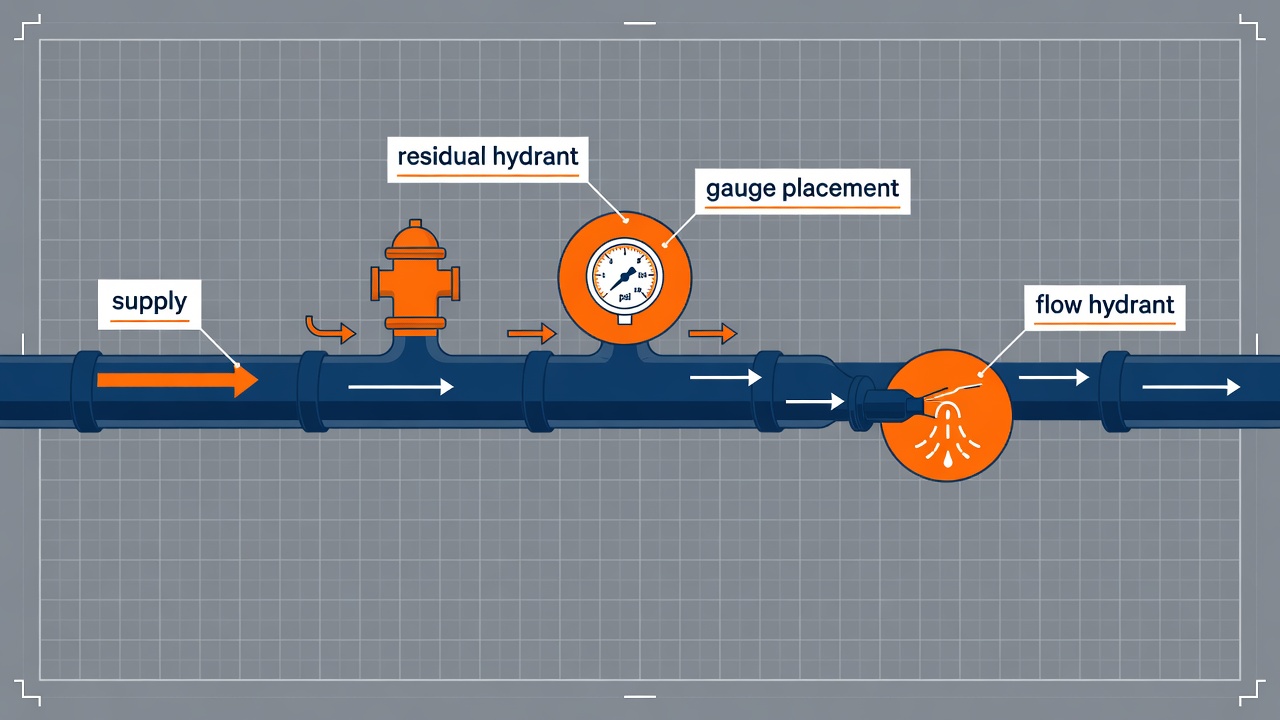
That foundation is won or lost when you choose the pair. Planning is not paperwork theater—it is the moment you decide whether residual will register true system drop or a misleading local quirk. Before caps come off, pick a residual hydrant and one or more flow hydrants that force the network to show capacity under load, then confirm the street can absorb the discharge without creating a hazard.
Read the main map before you pick iron
Open a simple main map or GIS export and trace the supply path toward the test area. Place the residual (pressure-only) hydrant between the flow hydrant(s) and the water supply—on the route water must travel to feed the flowing outlets. When residual sits on a side branch, beyond the flow hydrant, or on a leg that is not carrying the test draw, the gauge can miss the real drop and you record a branch artifact instead of system capability. Mark both hydrants, the assumed supply direction, and any known closed valves so the crew is not guessing in the street.
Practical pairing rules that hold up in the field
Keep residual and flow in the same pressure zone. Confirm main-size continuity along the path you care about—do not jump across a severe bottleneck unless that bottleneck is exactly what you intend to measure. Leave enough distance that discharge does not hydraulically “hide” from the gauge hydrant: too close and local turbulence or jet effects can skew the residual reading; far enough, and the residual feels the main-system draw the way a fire would. Never assign flow duty to the residual hydrant. Its only job is a steady, honest pressure under load.
When one steamer is not enough
If a single steamer outlet will not pull residual down enough for a meaningful drop, plan multi-outlet flow on the same hydrant or bring a second flow hydrant online. The point is not maximum spectacle—it is a residual that clearly moves from static so later available-fire-flow work rests on real system response. Keep roles clean: residual stays pressure-only; all discharge stays on the designated flow hydrant(s). Note outlet sizes and coefficients for every flowing opening you intend to use so field notes match what actually opens.
Public impact and discharge path
Walk the water’s path before you commit. Check drainage, traffic lanes, driveways, and landscaping. Ask whether discharge will ice in cold weather, flood a low spot, undermine a curb, or enter a storm inlet that should not take main water. Diffusers, hose lays, and a second crew member for traffic or splash control are part of the plan, not afterthoughts. If the only easy dump path creates a safety or property problem, relocate the flow hydrant or reschedule rather than forcing a messy test.
Go / no-go before you stage
Cancel or relocate when the map and a quick valve check show the only available hydrant cannot represent the system you need to measure:
- Go — Residual sits on the supply path between flow and source; both hydrants share the same pressure zone; mains are continuous enough for the drop you care about; discharge path is controllable.
- Go (with multi-flow) — One outlet will not move residual enough; plan extra outlets or a second flow hydrant while residual stays pure.
- No-go / relocate — Only candidate is on an isolated stub, dead-end with no supply-side residual option, or a pocket behind a known or suspected closed valve.
- No-go / relocate — Residual would have to sit past the flow hydrant or on a side branch that will not carry the test draw.
- No-go / delay — Discharge will ice a roadway, flood a sensitive area, or cannot be kept out of an inlet you must protect, and no alternate lay fixes it.
A clean pair on the map is what makes the live sequence worth running. Once residual and flow roles are fixed and the street can take the water, you are ready for permits, utility notice, and crew assignments—before anyone loosens a cap.
Lock In Permits, Notices, and Field Roles Before Caps Come Off
That readiness starts with the water utility or public works—not with wrenches. Call or ticket the operator who owns the main and confirm you have explicit permission to open hydrants for test flow. Ask for current main status on the feed to your residual and flow locations: recent breaks or repairs, valves that may still be throttled after work, scheduled flushing that could skew residual, and any temporary outages or pressure-reduction programs. If the system is under boil-water notice, construction isolation, or a known low-pressure event, postpone. Get a contact who can authorize operation and, if required, a field tech who knows which valves actually move water in that block. Document who approved the test, the date window, and any outlet or diffuser restrictions they impose. Without that clearance, a clean residual/flow pair on the map is still an unauthorized discharge.
Name the roles before the street gets loud
Assign people by task so readings do not depend on shouted numbers across a discharging steamer. One person owns the residual hydrant only: static and residual gauge, time stamps, and the call that residual has stabilized. A second person owns flow: pitot or meter, outlet coefficient and size confirmation, and the moment full flow is established. A third keeps the log—times, gauge values, weather notes, and who authorized the open—so the residual and flow hands are not writing while water is moving. If the crew is small, the logger can stand with residual, but never with the pitot hand; discharge noise and spray make dual duty a source of transposed figures. Agree on hand signals or radio brevity before any cap turns: residual ready, open flow, residual stable, shut down.
Traffic, discharge path, and bystander control
Set traffic control for every lane the stream, hose, or spray can reach. Cones, a spotter, and a clear kill path for the flow hydrant matter as much as the gauges. Aim discharge where it will not undercut pavement, flood basements, or ice a travel lane. Keep bystanders and parked vehicles out of the stream line and well clear of caps—loose or pressurized caps are projectiles. One crew member watches the discharge path continuously while flow is open; that person is not reading pitot or residual.
Cap removal, barrel flush, and hardware check
Only after roles and the street are set do caps come off. Crack each cap slowly, stand aside from the outlet face, and relieve any trapped pressure before spinning it free. Open the hydrant briefly to flush the barrel and seat—rust, gravel, or standing water will foul a pitot reading and can damage a diffuser. While the barrel is open, check for a seized stem, missing or rounded operating nut, damaged outlet threads, and a cap that will not reseat cleanly. If the stem will not travel full open or an outlet is unusable, stop and relocate rather than force a partial test. Instruments go on only after the hydrant proves it can open, flush, and shut without fighting the crew.
Weather and temperature set hard limits. Freezing air turns discharge into ice sheets on the roadway and can lock gauges and stems; residual under those conditions is neither safe nor representative. High wind throws the stream unpredictably; heavy rain or flooding already in the gutter masks whether your discharge is controlled. Extreme heat that drives unusual system demand can make a midday residual look weaker than the main’s normal capability—note conditions and, if the reading will not reflect typical supply, reschedule. When permits, utility notice, named roles, traffic and discharge control, and a sound hydrant check are all in place, the crew can rig gauges and flow gear without turning the live sequence into improvisation.
Rigging Residual Gauges, Diffusers, and Pitot Gear for Clean Readings
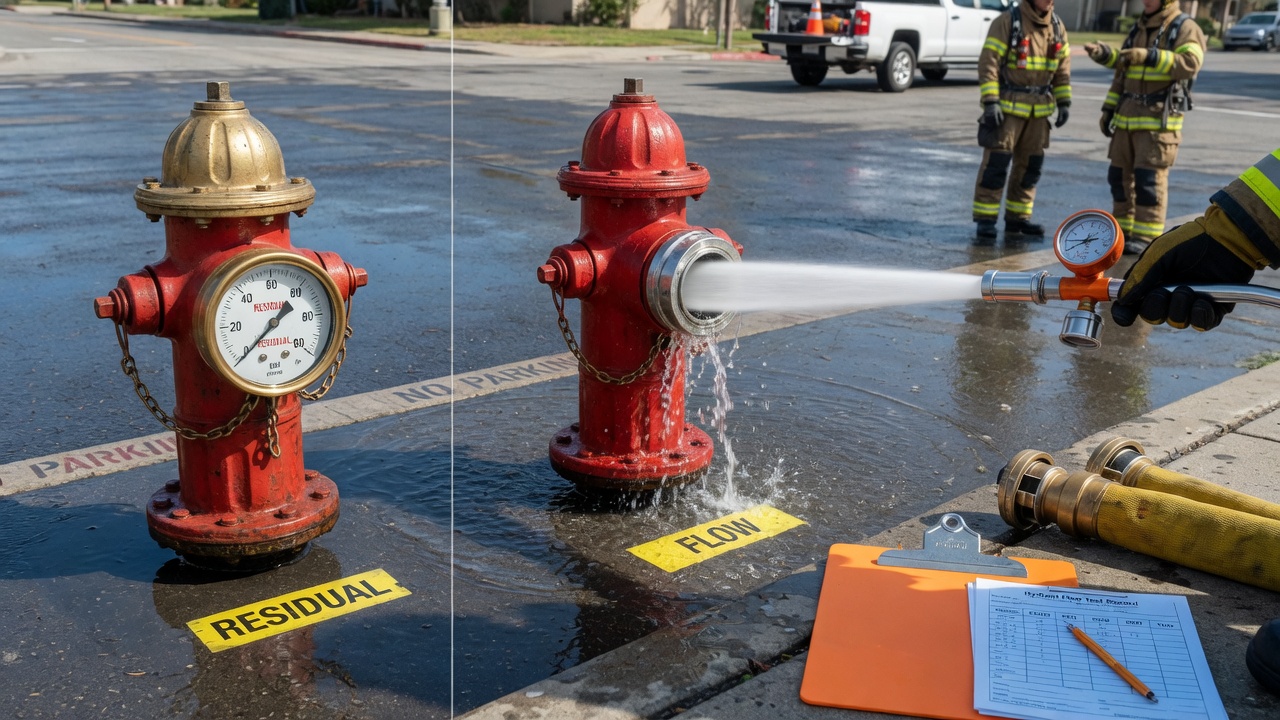
Rigging is where residual and flow pairings either hold up or fall apart: every gauge, outlet, and pitot position you set now is what the live sequence will record. Do the work slowly, call it out once, and lock the sheet before anyone opens a valve for flow.
Residual hydrant: cap gauge, bleed, and range check
On the residual hydrant, install a pressure gauge on a capped outlet—typically a 2½-inch nozzle with a gauge cap or a dedicated test cap threaded on tight. Open the hydrant slowly until the barrel fills, then crack the bleeder or loosen the gauge fitting just enough to purge air. Air left in the line will bounce the needle and make static and residual look noisier than the main really is. Close the bleeder, confirm a steady reading, and verify the gauge range actually covers expected static and residual pressures. A gauge that pegs at the top of its scale, or one that lives in the bottom tenth of the dial, is the wrong tool for the job—swap it before you commit to the test.
Flow hydrant: outlet choice, diffuser or playpipe, and readable streams
At the flow hydrant, pick the outlet that gives a clean, controllable discharge without hammering the main or spraying traffic and bystanders. A steamer (pumper) outlet is common when one large stream is enough; use one or more 2½-inch outlets when you need multiple tips or when the steamer alone will not move residual enough to matter. Fit a diffuser or playpipe when the raw jet is unsafe, unreadable, or likely to damage pavement and landscaping. Diffusers break energy and keep the stream manageable; a playpipe with a known tip steadies the jet so pitot work is repeatable. Poor rigging—half-open gates, kinked or misaligned tips, streams that slap the ground or each other—distorts velocity at the measurement point and turns an otherwise good pairing into scrap numbers.
Pitot placement: center of the stream, same technique every time
Hold the pitot blade in the vena contracta—roughly the smooth, contracted portion of the jet a short distance off the outlet face—and keep the tip in the center of the stream, square to the flow. Do not bury the blade in the orifice or chase the ragged edge of the jet. The field cue is simple: look for the clearest, most cylindrical part of the stream and park the tip there the same way on every outlet. Consistency beats perfect geometry; the sheet should show the same technique from the first flow hydrant to the last.
One radio script, one moment in the sequence
Agree on a short call-and-repeat before anything opens for test flow. Residual calls static when the system is quiet, then residual when flow is established and steady. Flow calls the pitot (or meter) reading at that same steady moment. Logger repeats both values once so the sheet and the voices match. No side chatter, no second “confirmations” minutes later—static, residual, and flow are paired in time as well as on the map. When gauges are bled, outlets and coefficients are on the sheet, pitot technique is locked, and the radio script is clear, the crew is ready for the live sequence itself.
Running the Live Sequence: Static First, Then Residual and Flow Together
That readiness is the cue to start the clock on the live sequence—and the sequence is where defensible numbers are either captured or lost. Everything before this moment was setup. From here, the order of operations and the discipline of waiting for steady conditions decide whether the residual and flow pair will stand up later.
Static before any discharge
Record static pressure at the residual hydrant with every test outlet still closed. No flow is on the system yet—only the residual gauge, bled and stable, reading system pressure at rest. If the utility or the crew can confirm that no nearby large users (flushing, irrigation, industrial draws) are pulling hard on the same main, note that on the sheet; if they cannot, note the uncertainty instead of guessing. Static is the baseline the residual will be compared against, so it belongs on the log before the first outlet opens.
Open smoothly, wait for steady, then call the set
Open the planned flow outlet or outlets smoothly to the position the crew agreed on during rigging—full open on a steamer, or the nozzle/diffuser setting already chosen. Do not slam valves; sudden openings hammer mains and throw gauges off before anyone can read them. Once water is moving, wait. Streams straighten, pitot needles settle, and the residual gauge finds its new level. Only after that steady state is obvious does the residual person call residual pressure and the flow person call the pitot (or meter) reading as one matched set under the radio script already locked in. Those two numbers are useless if they are not simultaneous.
Keep the residual hydrant closed to flow for the entire test. It is a pressure station only. Opening it to discharge turns the residual point into another flow point and erases the pressure drop the test is meant to measure. If residual barely moves after the planned outlets are open, the crew decides in the field: add another outlet or a second flow hydrant if pairing and main capacity allow, or document that the test is limited—main too strong relative to the outlets available, or hydraulic conditions that will not yield a meaningful drop—and stop rather than invent a larger drop that never occurred.
Shut down in reverse and leave the hydrant ready
When the matched set is on the sheet, shut down in reverse order: close flow outlets smoothly, confirm residual has returned toward static, then secure hardware. Reinstall caps hand-tight and finish with the proper wrench per local practice—tight enough to seal, not so brutal that the next crew cannot remove them. Clear standing water and ice hazards from sidewalks, lanes, and gutters so the test does not leave a slip or traffic problem behind. Verify each flowed hydrant steams or drains as expected for its type; a barrel that will not drain needs a note and, if required by the utility, a follow-up so the hydrant is not left freeze-prone or full. The live sequence ends only when the system is back to normal service condition and the log holds one clean static, one paired residual, and the flow readings taken at the same moment.
Classify, Mark, and Sanity-Check Before You Leave the Curb

With the system restored and one clean static–residual–flow set in the log, the crew’s job is not finished when the caps go back on. The numbers still have to be turned into a field classification, the hydrant has to be marked so the next engine company can read supply at a glance, and the sheet has to survive a quick validity check before anyone drives away. That on-site work is what keeps a defensible NFPA 291 test from collapsing into a pile of unusable readings.
Rated capacity bands and the colors crews actually use
NFPA 291 links the hydrant’s rated capacity—flow available at a standard residual pressure—to class ratings that many fire departments paint on bonnets and caps. The color is a street-level shorthand: light blue for the highest band, then green, orange, and red as capacity steps down. Your field impression of class comes straight from the paired residual and flow you just recorded. Convert that pair into a rated capacity (or a clear estimate), then map it to the color scheme your AHJ or department follows.
| Class | Rated capacity band | Common bonnet/cap color |
|---|---|---|
| AA | Highest band | Light blue |
| A | Upper-mid band | Green |
| B | Lower-mid band | Orange |
| C | Lowest band | Red |
Treat that on-the-spot class as a working mark, not the final engineering answer. Multiple outlets, multi-hydrant flows, or an unusual residual drop often need office confirmation and a full available-fire-flow calculation before the rating is locked. Paint what the field data supports; note on the sheet when the class is provisional.
Validity red flags before any paint hits the iron
A clean log still fails if the readings themselves are suspect. Run this check while the crew is still on site:
- Residual pressure that drops below the utility’s or AHJ’s safe operating floor—document and do not force a class from an unsafe condition.
- Gauge bounce or needle hunt that never settled into a steady reading when residual and flow were called.
- Air-affected or hollow streams that make the pitot or meter reading unreliable.
- Signs of unknown closed valves (abrupt residual cliff, dead main feel, or neighborhood pressure complaints during the test).
- Hydrant ID, address, or asset tag on the sheet that does not match the barrel you actually flowed or gauged.
Any red flag means hold the color mark, flag the sheet, and either re-test under better conditions or hand the packet forward with the defect clearly called out.
Practical marking without fighting the utility’s colors
When local practice allows field marking, color the bonnet and caps—the parts responders see first—not the barrel body if the utility already owns body color for ownership or main-size coding. Use exterior-grade hydrant paint that will survive weather and hose abuse; a mark that peels before the next inspection helps no one. If the utility or AHJ forbids overwriting their scheme, leave their colors alone, apply only approved tags or rings, and record the class on the test sheet and any department overlay map instead. Either way, leave the hydrant fully operable, caps tight, and identifiable. A provisional class pending engineering sign-off is fine; an unmarked, undrained, or mis-IDed hydrant is not.
The Handoff Packet Designers, Insurers, and AHJs Will Accept
Once the hydrant is left operable and marked, the job is not finished until the record can stand on its own. The field work only becomes defensible when every paired observation travels with enough context that a designer, insurer, or AHJ can reconstruct what happened without calling the crew. That means building a complete handoff packet before anyone leaves the curb—not a scrap of paper with three numbers, but a short, self-contained file that proves the residual and flow were taken together under real system conditions.
What belongs in the packet
Capture hydrant IDs and street addresses for both residual and flow locations, main size if it is known from the utility map, and the full set of static, residual, and flow readings exactly as observed. Note outlet diameter, the coefficient used, date and time, weather and temperature, crew names and roles, and the authorizing utility contact who cleared the test. Those items turn a set of gauge snaps into a usable system measurement instead of an orphaned pitot reading.
Add geotagged photos of the residual gauge face at static and at residual, the pitot or meter setup on the flowing outlet, and the discharge path so anyone reviewing later can see clearance and public impact. A simple sketch—residual hydrant, flow hydrant(s), and direction toward supply—closes the loop on the pairing decisions made earlier. Keep the photos and sketch with the numbers; they are often the fastest way to settle a later challenge about which hydrant was actually tested.
Raw paired data only—no field smoothing
Do not back-calculate available fire flow, round residual pressure, or “smooth” a bouncing gauge while still on site. The packet should hold the raw, time-matched residual and flow observations. Later available-fire-flow work, ISO submissions, and design calculations stay auditable only when the office can see exactly what the system did under load. Field theory and calculator polish belong downstream; the street record belongs upstream and unedited.
Retest triggers and distribution
Treat the packet as incomplete—and schedule a retest—if residual was never recorded, gauge photos are illegible or missing, the wrong hydrant was paired, or there is no written or logged proof of utility permission. Those gaps cannot be fixed with a better spreadsheet; they require another live sequence.
Route copies to fire prevention, the water utility, the design engineer of record, and whatever insurance or ISO workflow your jurisdiction uses. Retain the full packet according to your agency’s normal engineering and inspection retention rules so the next plan review or system evaluation can pull the same residual/flow pair without repeating the street work. When the packet is complete, the test has done its real job: it has given every downstream user a clear, paired, and defensible picture of what the main could deliver that day.